 Home Cleaning
 Moving Cleaning
 Deep Cleaning
 Window Cleaning
 Viewing Cleaning
 Custom Cleaning

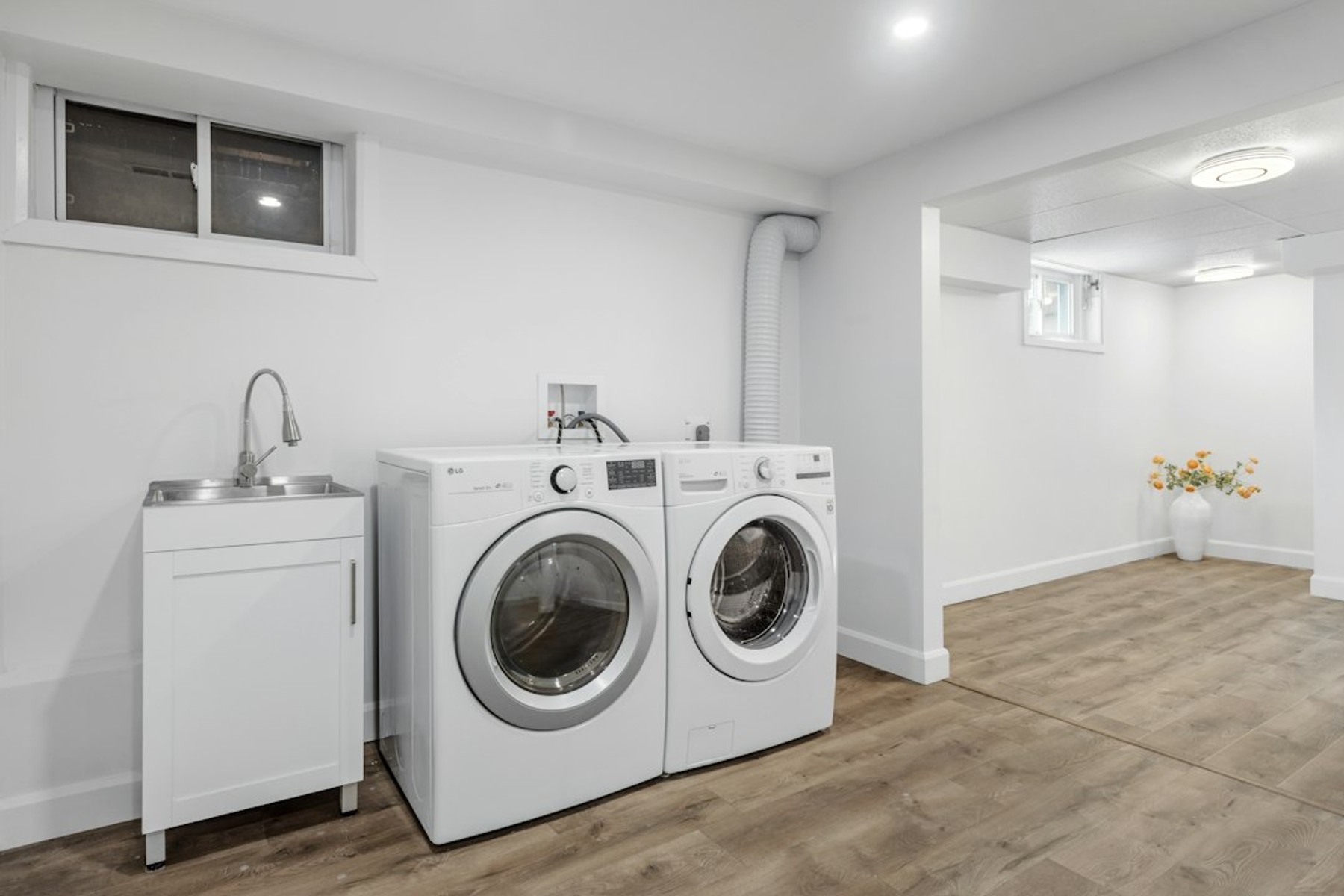
The tvättstuga: Swedish laundry room rules nobody tells you
Booking boards, grace periods, the dryer filter and the floor. What a Swedish shared laundry room actually expects from you, before your first slot.
In most Swedish apartment buildings, laundry happens in a shared room in the basement called the tvättstuga. The tvättstuga rules come down to four things: book a slot, start on time, clean up after yourself and leave nothing behind. The details are posted on the wall by the door, and they differ from building to building.
Cleaning up means more than taking your clothes out. You wipe the machines, empty the dryer filter and wash the floor before you leave. That job stays yours even if you pay for home cleaning in Stockholm, because a home clean covers your own flat, not the shared spaces in the building.
How booking a laundry slot works
There are three common systems. The oldest is a board on the wall with a grid of days and time slots. Your flat comes with a small lock cylinder, and you book by pushing it into the slot you want. Nobody can move it without your key.
Newer buildings use a digital panel by the door. You book and start your session with the same electronic key tag that opens the front door. Many of these systems also let you book from your phone, through the landlord's or housing association's website or app.
Slots are usually two to five hours long. Many buildings keep the room open from 07:00 to 22:00, and some let you hold only one booking at a time. In a bostadsrätt (a flat owned through a housing association), the rules come from the association's board. In a rental, they come from the landlord.
Being late can cost you the slot
A booking is not guaranteed for its full length. Most buildings release it if you have not started within a set time, and that limit is commonly somewhere between 15 minutes and an hour. After that, a neighbour can take the machines, and you have no claim on them.
Starting usually means more than turning up. With a digital system, you activate the session by holding your tag against the reader. With a board, you start a wash. Read the sign on your first visit, because the grace period is the rule that catches newcomers out.
Finish on time as well. When your slot ends, the next person is entitled to the washing machines, even if your last load has ten minutes left. Many buildings give you an extra hour in the drying room or at the tumble dryer after your session, but not at the washers.
What cleaning up after yourself actually means
The list is short, and large landlords such as Heimstaden publish almost the same one. Wipe out the drum and the rubber seal of every machine you used. Pull out the detergent drawer and rinse away leftover powder or gel. Wipe the tops of the machines and the counter where you folded.
Then empty the lint filter in the tumble dryer, and in the drying cabinet if there is one. A full filter makes drying slower, and the next person opens the door to a mat of someone else's fluff. It comes off by hand and goes straight in the bin.
Finish with the floor. Sweep or mop it, using the broom and mop that are usually kept in the room. This step surprises people from countries where a caretaker cleans shared areas. Here it is part of your slot, not a favour. Take your empty packaging with you, switch off the light and lock the door.
Things you should not wash or bring
Rugs are the classic one. Many buildings ban them from the ordinary machines whatever their size. Some laundry rooms have a separate, larger machine for rugs, or a booking for it. If yours does not, a laundry service is the alternative.
Avoid chlorine bleach, because traces can ruin the next person's wash. Empty your pockets, since a forgotten tissue ends up in someone else's load. Put underwired bras in a laundry bag. Pets and smoking are not allowed in most laundry rooms, and the laundry basket stays inside the room.
Dose detergent by the instructions on the pack. Extra detergent does not clean better, it leaves residue in the drawer for you to rinse out and in the drum for the next person. Run full loads where you can rather than several half-empty ones, which also leaves more machine time for everyone else.
Forgotten laundry, broken machines and notes on the wall
If a neighbour's laundry is still in the machine when your slot starts, move it carefully to a clean surface. Do not put it on the floor, and do not take it out of the room.
If a machine breaks, report it to your landlord or housing association through their fault report form rather than trying to fix it. A short note on the machine saves the next person from losing a load to it.
Laundry room disputes are one of the best-known sources of friction between Swedish neighbours, and they are often carried out through anonymous notes taped to the wall. The notes are typically about the floor, the filter or a slot nobody showed up for. In a rental, repeated problems can lead to a written warning from the landlord.
The tvättstuga is one of the shared spaces you look after yourself. Inside your own flat, home cleaning covers floors, the kitchen and the bathroom, and our guide to booking a cleaner in Sweden explains keys, equipment and what to expect on the first visit.
Wondering what a cleaning costs? Every price by service and home size is collected on the pricing page, after the RUT deduction.
Common questions
What happens if I miss my tvättstuga slot?
Most buildings release a slot if you have not started within a set time, commonly between 15 minutes and an hour. After that, a neighbour can use the machines. The exact limit is on the sign in your laundry room or in the booking app.
Do I really have to mop the laundry room floor?
Yes. In most Swedish buildings, sweeping or mopping the floor is part of finishing your slot, along with wiping the machines and emptying the dryer filter. A broom and mop are usually kept in the room for that.
Can I wash a rug in the tvättstuga?
Usually not in the ordinary machines. Many landlords and housing associations ban rugs of any size from them. Check whether your building has a separate rug machine or a booking for one.
Does a Cleenki home cleaning cover the laundry room in my building?
A Cleenki home cleaning covers your own home: vacuuming and mopping in every room, the kitchen, the bathroom, dusting, emptying bins and making the bed. Shared spaces such as the tvättstuga belong to the building, and the rules for cleaning them come from your landlord or housing association.